
Product Management
Discovery, requirements, roadmap, launch, and iteration. 40+ initiatives shipped on a platform replatform at Solo.
- Discovery
- Roadmap
- Requirements
- Launch
ProductAITransformation
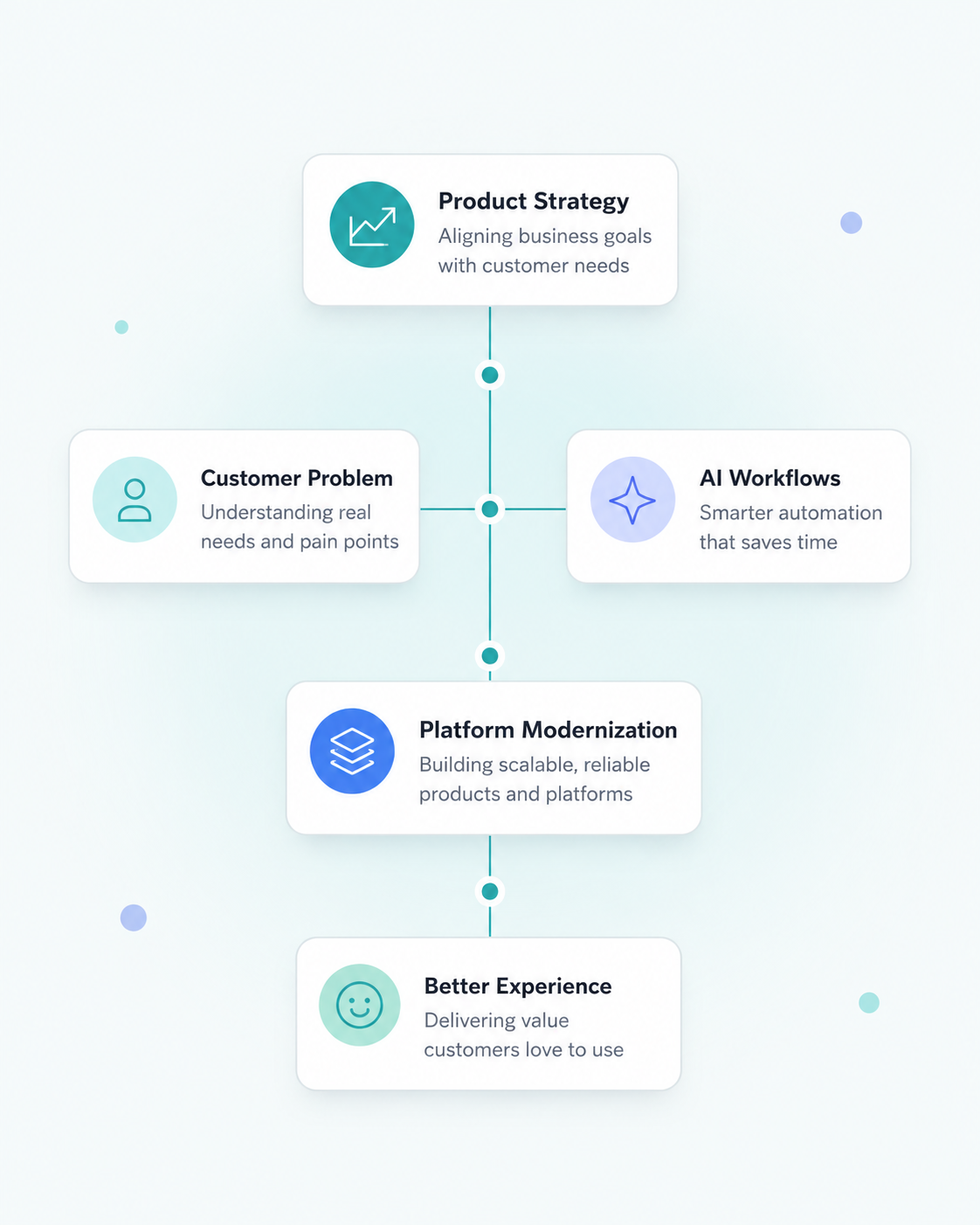
I work at the intersection of people, process, and technology — understanding how things work, finding what isn't working, and bringing the right people together to build something better.
What I Do
My career has crossed product, programs, operations, UX, customer experience, and now technology risk. The titles change. The common thread is understanding complicated systems and making them work better.
Discovery, requirements, roadmap, launch, and iteration. 40+ initiatives shipped on a platform replatform at Solo.
Concurrent workstreams, dependencies, milestones, and executive visibility — from event operations to software delivery.
Building the operating system underneath the work — onboarding, QA, documentation, and reporting that scale with volume.
Designing the flow, not just the screens — queue management, intake, assignment, escalation, and the handoffs in between.
A decade of customer-facing ownership: account management, attorney relations, adoption, and turning feedback into product change.
Actively moving into technology risk program work. It builds on what I already do: surfacing risks and dependencies, standardizing controls, and designing human review into AI workflows.
My Approach
Every step is about the same thing: understanding what's actually happening, and making the next decision a better one.
Get past the symptom to what's actually going wrong.
The people closest to the work usually know the most.
Separate what someone asks for from what they actually need.
Design the workflow, not just the screen.
Align the people who will build, use, and support it.
Watch what actually happens after launch and adjust.
The best way to understand how I think is to see the problems I’ve actually worked through — the decisions, tradeoffs, collaboration, and outcomes behind them.